01
Because our greenhouses sit inside the city rather than in distant fields, the gap between cutting a crop and delivering it is measured in hours, not days. Leaves are picked at their structural peak, packed immediately, and moved to nearby kitchens and market stalls while the plant tissue is still turgid and aromatic. That short journey preserves crunch, colour and shelf life, which means less spoilage for buyers and produce that still looks vibrant after a full service. For chefs and grocers who have grown used to greens that wilt within a day of delivery, the difference in longevity and flavour is immediate, obvious and consistently repeatable across the entire week.
02
Traditional field supply rises and falls with weather, frost and rainfall, leaving buyers scrambling when crops fail or prices spike. Inside our controlled greenhouses, light, temperature, humidity and nutrients are tuned continuously, so production stays steady through the depths of a Belgian winter and the heat of midsummer alike. This predictability lets restaurants lock in menus and lets grocers plan promotions without fear of a sudden gap on the shelf. Standing orders are honoured week after week, and new partners can scale their volumes gradually, confident that the greens they build their offer around will still be growing and available regardless of what the sky is doing outside.
03
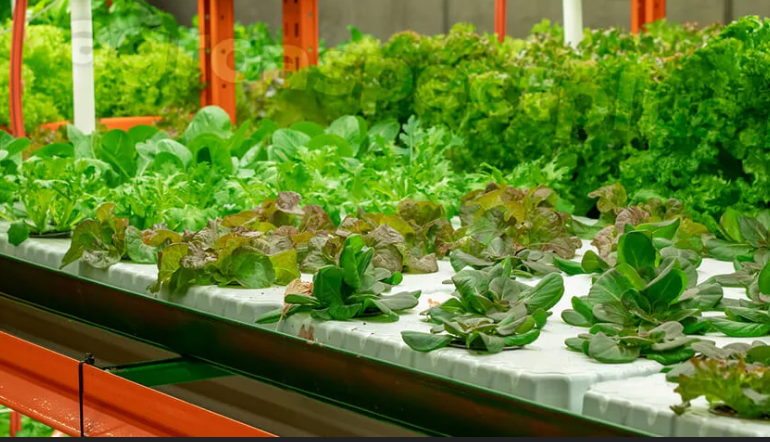
Our vertical growing systems recirculate water in closed loops, capturing what plants do not drink and returning it to the cycle rather than letting it drain away. Stacking crops on tiers means a single urban footprint produces what would otherwise require many times the horizontal field space. There are no run-off issues, minimal transport emissions, and dramatically reduced water demand compared with conventional cultivation. For partners who want to tell a credible sustainability story to their own customers, this efficiency is genuine and measurable rather than decorative. It also protects supply against drought and land pressure, keeping prices stable while shrinking the environmental cost attached to every leaf, herb and tomato we grow.
04
Kitchens and retailers depend on uniformity: the same leaf size, the same colour, the same weight per bunch, order after order. Because we control the growing environment down to fine tolerances, our crops arrive with remarkable consistency rather than the variability that comes with open-field farming. That reliability makes plating faster, portioning more accurate and pricing easier to hold. Buyers can standardise recipes and shelf displays around a known specification, confident that this week's delivery will match last week's. When something does need adjusting, we can fine-tune a growing cycle deliberately, giving partners a level of quality control that simply is not possible when produce passes through several intermediaries before it arrives.
05
Every crate we send out can be traced back to the exact greenhouse tier, growing cycle and harvest day it came from. There is no anonymous supply chain, no imported filler, and no uncertainty about where the produce originated. For restaurants and grocers who want to reassure their guests and shoppers, this transparency turns provenance into a real selling point rather than a vague claim. Local sourcing here means the crop was grown a short distance away by a team you can visit and speak to, not shipped across borders and relabelled. That closeness builds trust on both sides and keeps the relationship between grower and buyer direct, accountable and easy to verify.
06
No two buyers work the same way, so we shape supply around each partner instead of forcing everyone into one wholesale mould. A fine-dining kitchen might need small, precise weekly allocations of micro-herbs and edible flowers, while a busy grocer needs steady volumes of salad leaves and vine tomatoes. We accommodate both, adjusting pack sizes, delivery frequency and crop selection to match real operational needs. As a partnership grows, capacity can be reserved in advance and specific varieties grown to order. This flexibility means small independents and larger operators alike get a supply arrangement that genuinely suits their format, rather than a rigid catalogue that ignores how their business actually runs day to day.